How to Train for CrossFit Basics
What CrossFit Actually Is
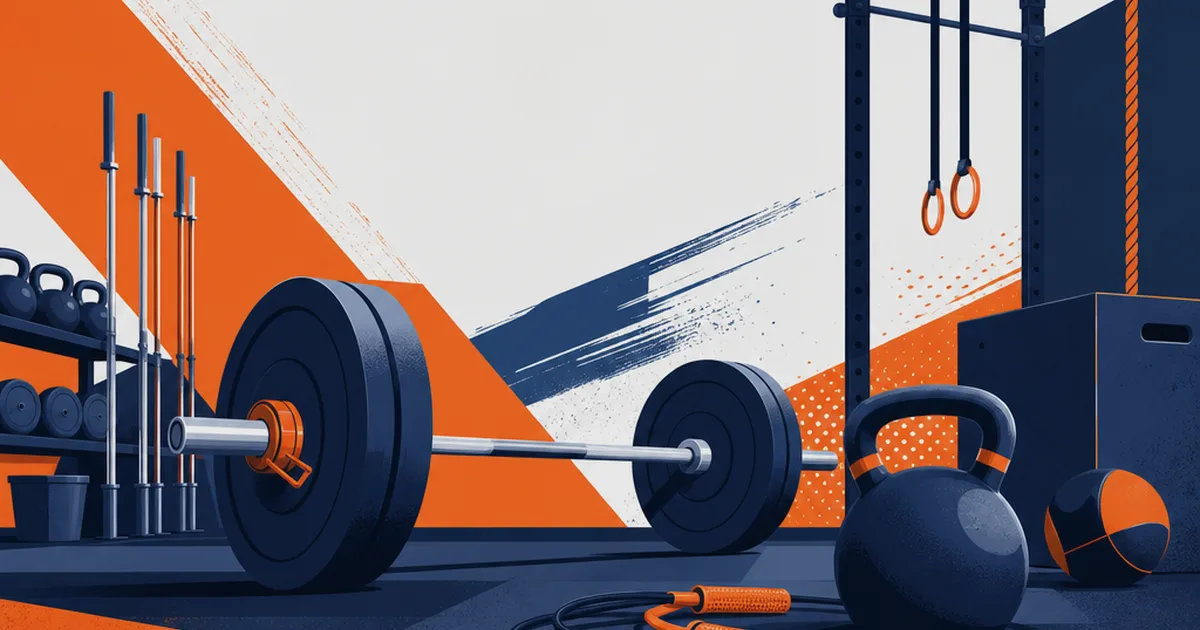
CrossFit is a strength-and-conditioning method built on constantly varied functional movements performed at relatively high intensity. Strip away the branding and it comes down to three families of movement: weightlifting (barbells, dumbbells, kettlebells), gymnastics (pull-ups, push-ups, muscle-ups, handstands, air squats), and monostructural cardio (running, rowing, biking, jumping rope). A good program rotates through all three so you never over-specialise.
The word you'll hear constantly is 'functional.' It means movements that mirror how the body is built to move in real life — picking things up off the floor (deadlift), standing from a squat, pressing overhead, throwing, climbing. These multi-joint movements recruit large amounts of muscle and are the reason CrossFit builds broad fitness rather than one narrow skill.
Intensity is the second pillar, and it's the one beginners misunderstand. Intensity is relative to you. For a first-week athlete, intensity might mean a brisk 200 m run and ten light kettlebell swings. For a Games athlete it might mean a 225 lb clean every minute. The stimulus — that hard-but-sustainable feeling — is what drives results, not the absolute weight on the bar.
The Box, the Class, and the Coach
A CrossFit gym is called a 'box,' a nod to the bare, warehouse-style spaces the sport grew up in. Unlike a globo gym where you wander between machines, CrossFit is coached in group classes on a clock. A typical hour looks like this:
- Warm-up: general movement plus specific prep for the day's movements (5–10 minutes).
- Skill or strength: technique work or a lifting piece such as 'build to a heavy set of 5 back squats.'
- The WOD (Workout of the Day): the conditioning piece, usually 5–25 minutes, scored by time or rounds.
- Cool-down and mobility: bringing the heart rate down and addressing tight tissue.
The coach is the difference between CrossFit and a random circuit off the internet. Their job is to teach mechanics first, then consistency, then intensity — in that order. A coach who lets a beginner chase a fast time with an ugly deadlift is not doing their job. Choose a box by watching how much its coaches actually coach.
The Vocabulary You'll Hear on Day One
CrossFit has its own shorthand, and hearing it for the first time is genuinely confusing. Here are the terms that matter early:
- WOD — Workout of the Day, the conditioning piece.
- AMRAP — As Many Rounds (or Reps) As Possible in a set time.
- EMOM — Every Minute On the Minute; you start a prescribed amount of work at the top of each minute.
- For time — complete the prescribed work as fast as possible; your time is your score.
- Rx — 'as prescribed,' meaning you did the workout with the exact weights and movements written.
- Scaled — you modified the workout (lighter weight, easier movement) to hit the intended stimulus.
- Metcon — metabolic conditioning, another word for the cardio-style WOD.
- PR — personal record; your best-ever lift or workout time.
- Box — the gym itself.
Surviving Your First Month
Most boxes run a beginner on-ramp or 'foundations' course before turning them loose in regular classes. Take it, even if you're already fit. On-ramp teaches the nine foundational movements — the air squat, front squat, overhead squat, shoulder press, push press, push jerk, deadlift, sumo deadlift high pull, and medicine-ball clean. These are the building blocks every complex lift is assembled from.
In your first month, your only job is to learn to move well and to show up. Leave your ego in the car. You will be tempted to add weight to keep up with the person next to you; resist it. The athletes who progress fastest over years are almost always the ones who scaled patiently in their first months and built a foundation that could hold real load later.
Expect to be sore — that's normal — but learn the difference between muscular soreness and sharp joint pain. The first is part of the process; the second is a signal to stop and talk to your coach.
Realistic Expectations and Common Fears
“Am I too out of shape to start?”
No. CrossFit is infinitely scalable by design — that's the whole point. The same workout that a competitor does with a 40 kg barbell, a beginner can do with a PVC pipe or a pair of light dumbbells. The movements stay the same; the load and volume adjust to you.
“Will I get hurt?”
CrossFit's injury rate, when it's coached properly, is comparable to other recreational strength sports and lower than many contact sports. The injuries that do happen usually trace back to ignoring the mechanics-consistency-intensity order or refusing to scale. Good coaching and honesty about your own limits are the best insurance you have.
“When will I see results?”
Most people notice better energy and mood within a few weeks, visible strength and work-capacity gains in two to three months, and meaningful body-composition change over three to six months of consistent training paired with sensible eating.
Where to Go From Here
Once the basics click, the fun begins: chasing your first strict pull-up, adding weight to a clean, shaving seconds off a benchmark. The rest of the guides on Fortress Fitness go deep on each piece — how WODs are programmed, how the Olympic lifts work, how to scale intelligently, and how to recover so you can keep coming back. Read them in whatever order matches what your box is throwing at you this week.
The single best predictor of long-term success in CrossFit isn't talent or starting fitness. It's adherence — quietly showing up three to five days a week, month after month. Everything else is detail.
Session summary
- CrossFit blends weightlifting, gymnastics, and cardio into constantly varied functional workouts.
- Intensity is relative — the goal is the right stimulus for you, not the heaviest bar in the room.
- Learn the vocabulary (WOD, AMRAP, EMOM, Rx, scaled) and never be afraid to ask a coach.
- Take the on-ramp, scale patiently, and prioritise moving well before moving heavy.
- Consistency over months, not intensity in a single session, is what actually builds fitness.