How to Train for Home CrossFit
You Can Absolutely Train CrossFit at Home
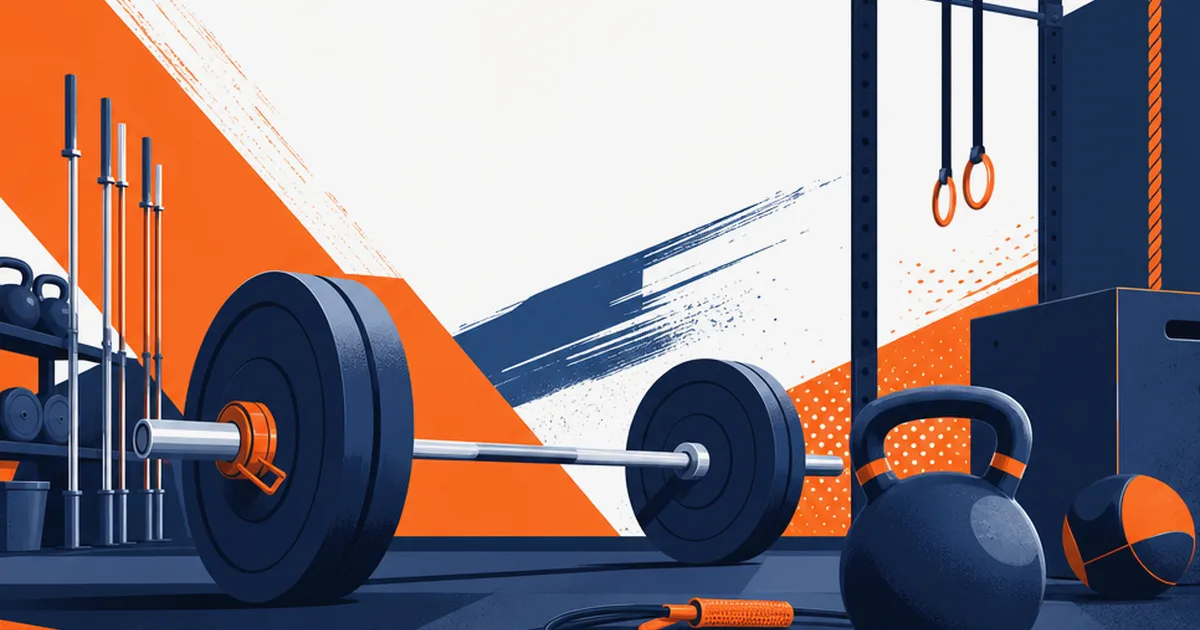
One of the most persistent myths in this sport is that you need a fully-equipped affiliate with rigs, rowers, and a coach barking splits to get a real CrossFit workout. You don't. Some of the fittest athletes around built their base in a single-car garage with a barbell, a pull-up bar, and a stubborn work ethic. The methodology — constantly varied functional movement at high intensity — doesn't care where you do it.
Training at home trades the community and coaching of a gym for convenience, cost savings, and total control over your schedule. It demands more self-discipline and a bit of programming knowledge, but it removes every excuse about commute time and class times. If you're consistent, a garage gym will get you remarkably far.
Equipment That Actually Earns Its Space
Home gym marketing will happily sell you a wall of specialty machines you'll never touch. The reality is that a short list of versatile, durable tools covers the overwhelming majority of CrossFit training. Here's how to prioritize purchases, roughly in order:
- A barbell and bumper plates — the single most valuable purchase; enables squats, presses, deadlifts, and the Olympic lifts.
- A pull-up bar or a rig — unlocks pull-ups, toes-to-bar, muscle-ups, and hanging work.
- Two adjustable dumbbells or a pair of kettlebells — enormous movement variety in a tiny footprint.
- A plyo box or a sturdy sturdy platform for box jumps and step-ups.
- A jump rope — cheap, and the gateway to double-unders and low-impact conditioning.
- A rower, bike, or ski erg if budget and space allow — the biggest quality-of-life upgrade for conditioning.
Notice what's not on the essentials list: cable machines, leg-press sleds, and specialty benches. Functional training rewards free weights and bodyweight over fixed-path machines, which is exactly why CrossFit translates so well to a minimalist setup.
Substituting Movements With Less Gear
The real skill of home training is intelligent substitution — swapping a movement you can't do for one that trains the same quality with the gear you have. A published WOD calling for equipment you don't own isn't off-limits; it just needs translating. Some reliable swaps:
- No rower or bike? Substitute a run, a jump-rope interval, or shuttle runs for the conditioning stimulus.
- No wall-ball? Use a dumbbell or kettlebell thruster to hit the same squat-to-overhead pattern.
- No GHD? Train the midline with hollow holds, sit-ups, and toes-to-bar instead.
- No heavy barbell? Load kettlebells or dumbbells and increase reps to match the intended time domain.
- No pull-up bar? Ring rows or heavy bent-over rows build the same pulling base.
The principle behind good substitution is to preserve the intended stimulus — the movement pattern, the time domain, and the intensity — rather than the exact exercise. If the workout was meant to be a fast, breathless sprint, keep it fast and breathless with whatever you've got.
Programming Effective Home WODs
Without a coach writing your workouts, you become your own programmer, which is a skill worth developing. The good news is that effective home programming follows the same principles as any good CrossFit plan: vary the stimulus, rotate through the modalities, and keep intensity honest. Structure your week so you touch gymnastics or bodyweight skill, weightlifting or strength, and monostructural conditioning across your sessions rather than repeating the same style.
You don't need fancy equipment to write brutal, effective sessions. A single kettlebell and a jump rope can produce a metcon that leaves you flat on the floor. Rotate the classic formats — AMRAPs, EMOMs, rounds-for-time, and chippers — to keep training varied and to hit different energy systems. Track what you do in a notebook or app so you can measure progress and repeat benchmark efforts. That record is what turns random workouts into a real program.
Staying Consistent Without a Class
The hardest part of home training isn't the equipment or the programming — it's showing up when no coach or class is waiting for you. Build structure to replace the accountability a gym provides. Schedule your training like an appointment, lay your gear out the night before, and set a fixed start time so the decision is already made when the moment arrives.
Recreate the community piece however you can: train with a partner, join an online programming group, or log your scores where others can see them. A little friendly competition and visibility does wonders for consistency. And keep your goals concrete — a benchmark time to beat, a lift to hit, a skill to unlock — so every session has a point. Home training rewards the self-motivated, and consistency, not equipment, is what ultimately drives your fitness forward.
Session summary
- CrossFit's methodology works anywhere — a barbell, a pull-up bar, and consistency will take you far.
- Prioritize versatile gear: barbell and plates, a pull-up bar, dumbbells or kettlebells, a box, and a jump rope.
- Skip fixed-path machines; free weights and bodyweight suit functional training better.
- Substitute movements by preserving the stimulus — the pattern, time domain, and intensity — not the exact exercise.
- Self-discipline replaces the class; schedule sessions, track scores, and build accountability to stay consistent.